Salalah, Oman known as “The Shining One,”is hemmed in between the spectacular crescent of the Dhofar Mountains on one side and the blue waters of the Arabian Sea on the other.
This Omani gem is spectacular and has it all! From camels ruling the roads, beautiful waterfalls, mesmerising mountain views, stunning white sandy beaches, turquoise waters, humpback dolphins, incredible cuisine, the best frankincense in the world to warmest of hospitality!
Here’s my guide to this stunning destination.

Where is Salalah?
Contents
Salalah is nestled in the southern region of the Sultanate of Oman on the southeastern coast of the Arabian Peninsula and has a unique geographical position, bordered by the azure waters of the Arabian Sea to the south and the rugged landscapes of the Dhofar mountain range to the north.
How do you get to Salalah?
There are Oman Air flights from Muscat and Dubai (each about 1 to 1.5 hrs) to Salalah International Airport.
We had a connecting flight from London via Muscat.
When is the best time to visit Salalah?
June, July, August and September is the peak season to visit when it is also the Khareef season. Salalah becomes a natural wonder in this season as it experiences light rain showers that make the city a true tourist attraction due to the lush green mountains, waterfalls and a mystical fog covering everything.
October, November, December, January and February is the moderate season. We visited in December and it was fantastic weather.
Frankincense

Did you know that the finest Frankincense in the world comes from Oman?
Frankincense has been one of Oman’s most famous and highly prized natural products since antiquity and it is a type of resin obtained from the Boswellia sacra tree which thrives in the semi-arid mountainous regions around Salalah.
Frankincense is collected by “tapping” small incisions into the bark, causing the tree to secrete a resin, which is then dried and hardened.
Trees start producing resin when they are around ten years old, after which they are tapped two or three times a year.
There are many varieties of frankincense, sorted by hand and graded according to colour, purity and aroma. The whiter and purer the colour, the better the grade!
The resin is then mixed with coals and burnt in a frankincense burner.
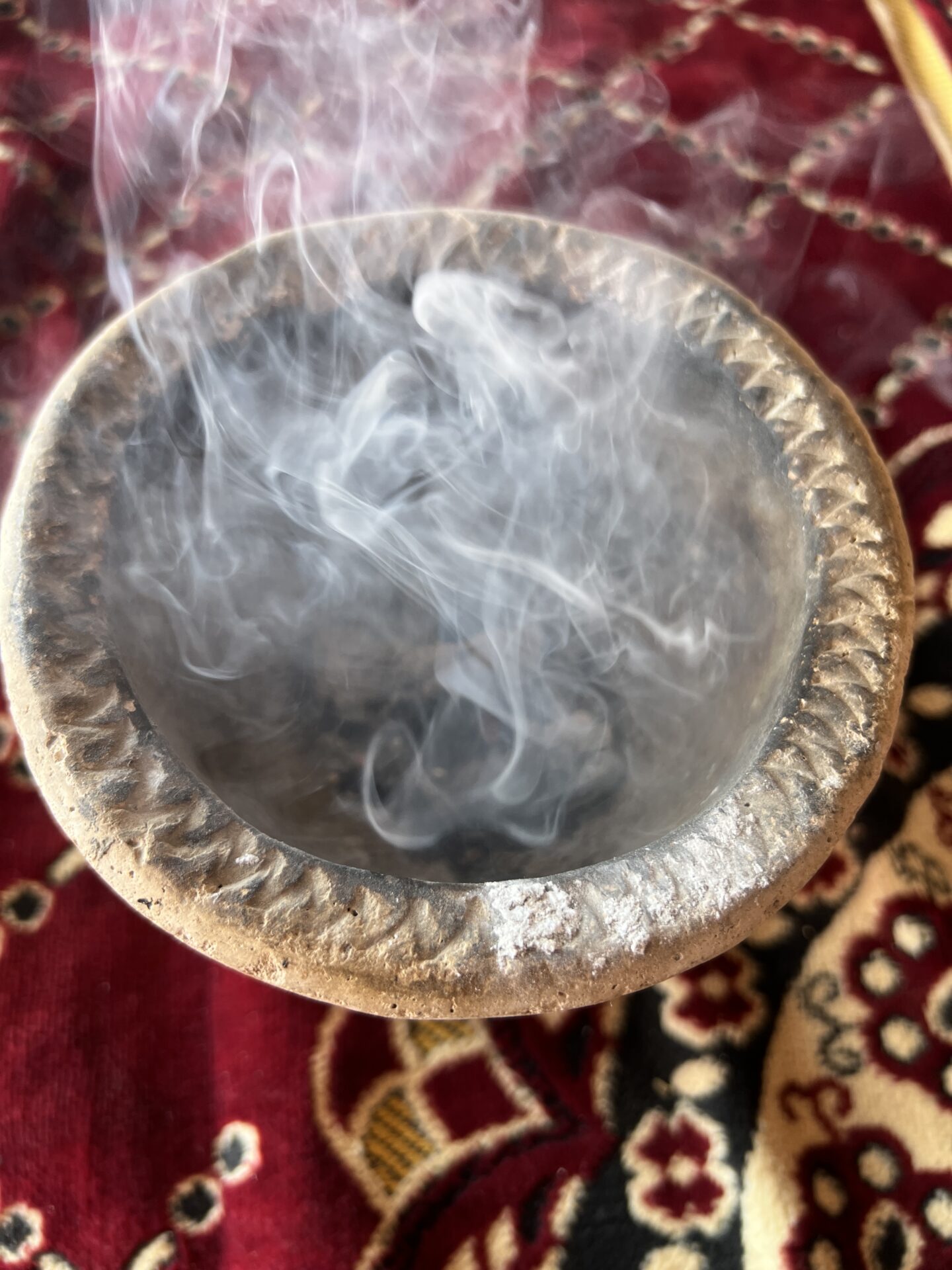
It is also used as an ingredient in numerous perfumes, as well as in Omani bukhoor.
Certain types of frankincense resin are also edible and are widely used in traditional Arabian and Asian medicines to promote healthy digestion and skin.
What not to miss in Salalah
Wadi Dawkah
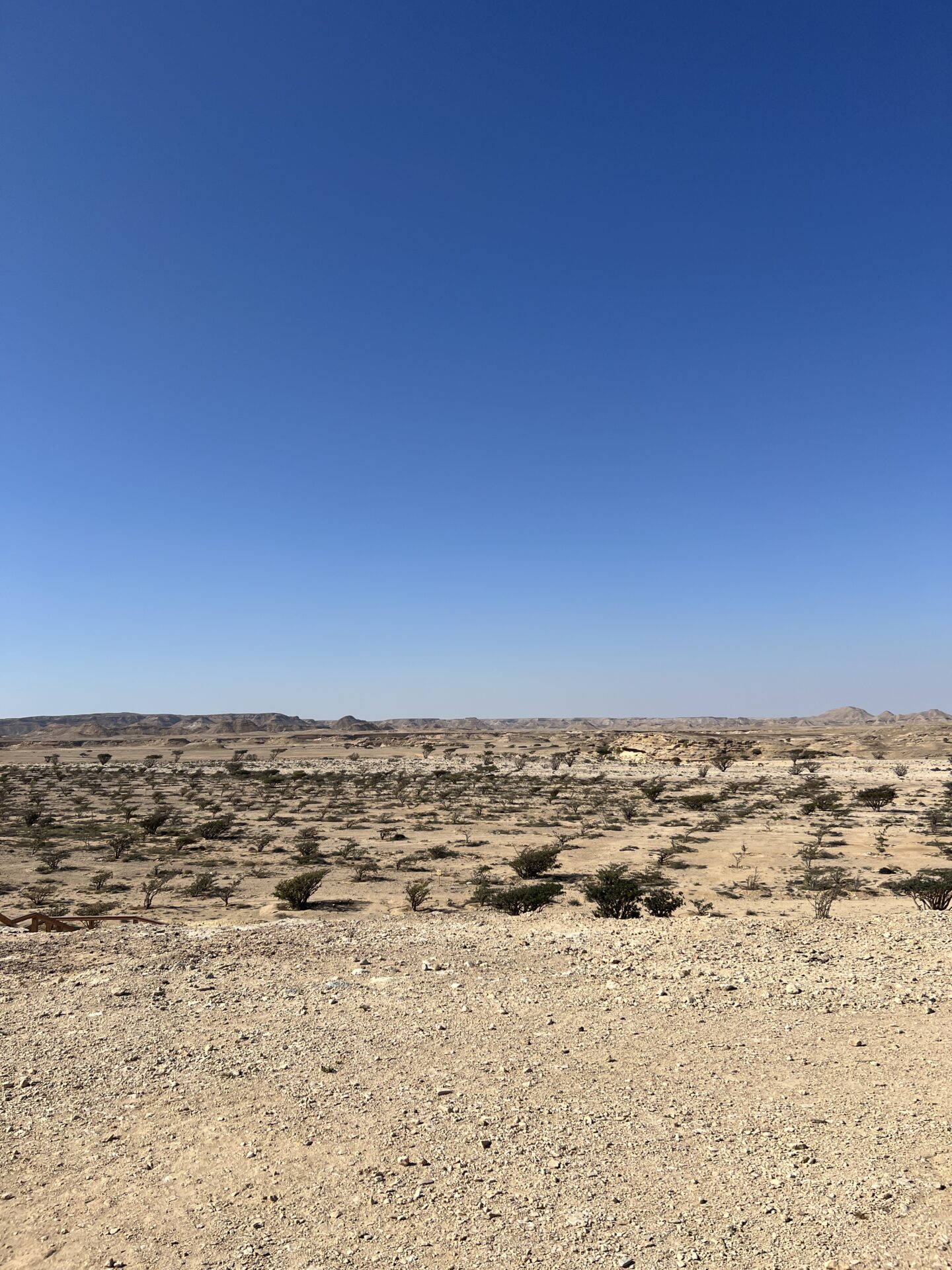
Wadi Dawkah is a UNESCO Heritage Site and an important part of the Frankincense trail. Here you will find Boswellia sacra trees which have the best quality Frankincense resin.
Wadi Darbat
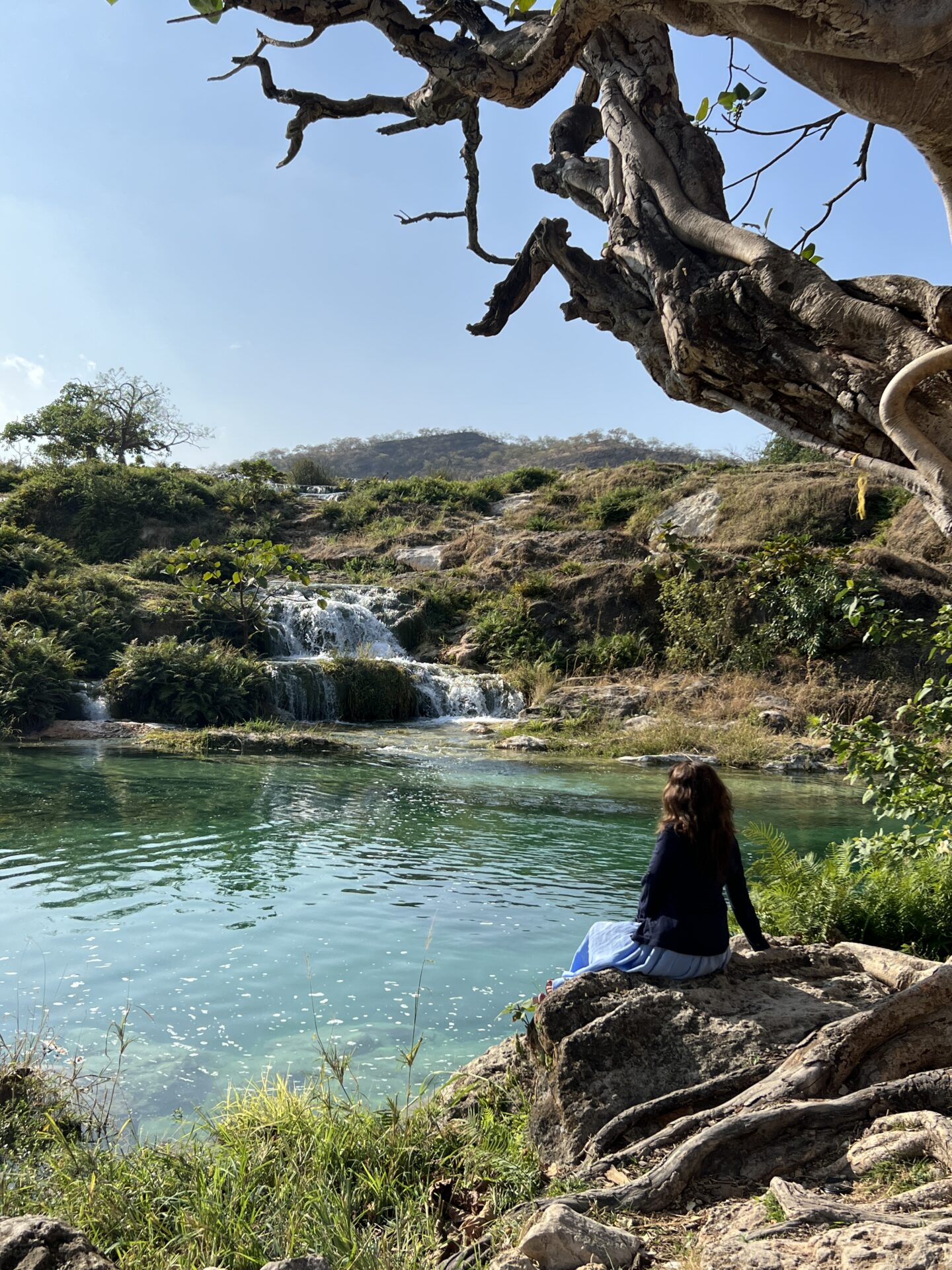
Salalah has stunning scenery and Wadi Darbat is an excellent example of this. During the peak season you will find an entire complex of waterfalls, pools and rivers within this unique landscape as monsoon waters flow from the mountains, creating jaw-dropping waterfalls (one reaches a height of 100 meters!).
We visited during the drier months but were still fortunate to see some falls and lush greenery.
The food!
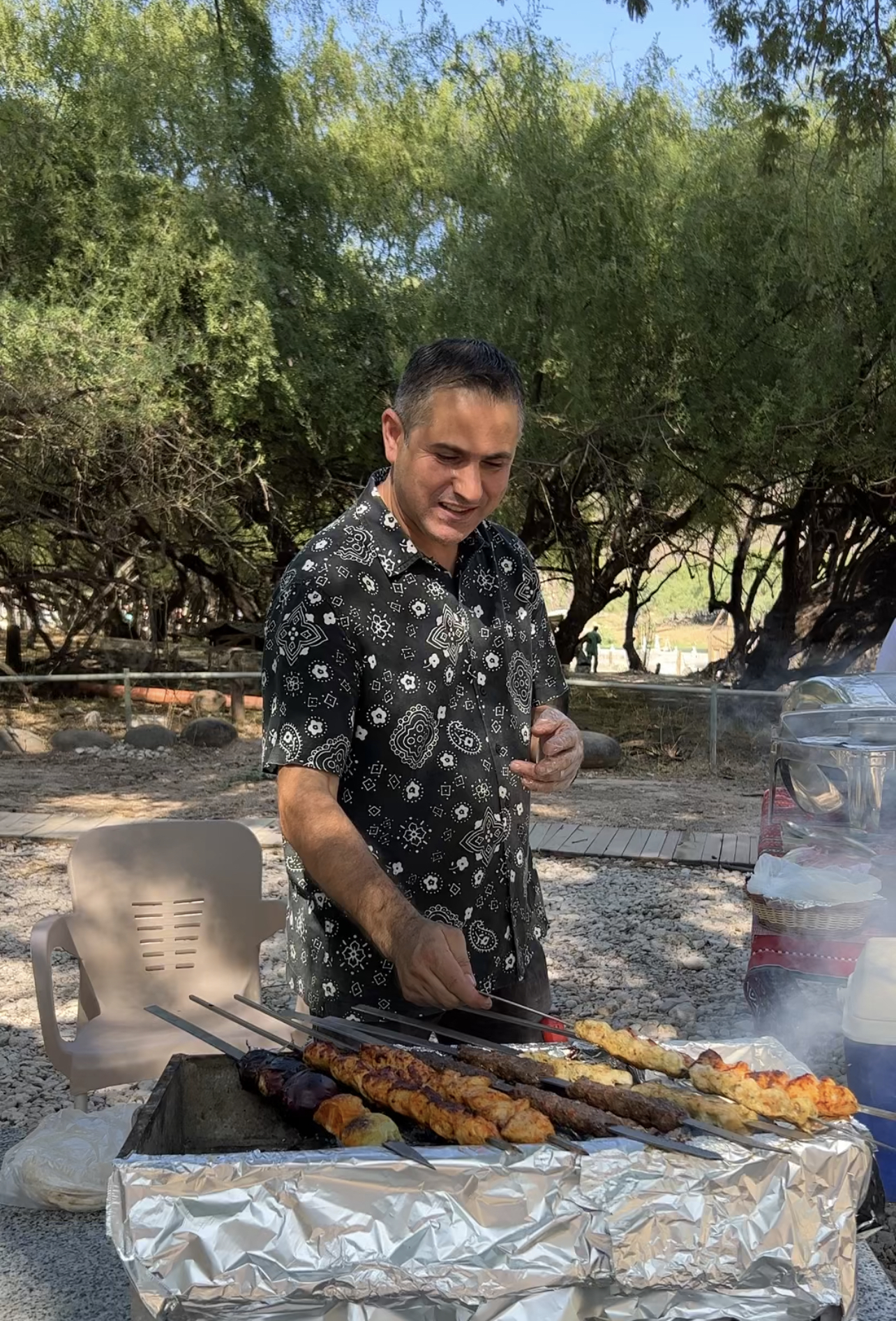
Omani food is so delicious and I recommend trying some local Dhofari dishes, including Camel meat, if you are adventurous enough! Cooking bbq meat on stones is a local speciality and try the variety of meats at Restaurant Number 10.
If you are vegetarian there are plenty of lovely dishes for you too, with smoked aubergine being my favourite!
Fazayah Beach
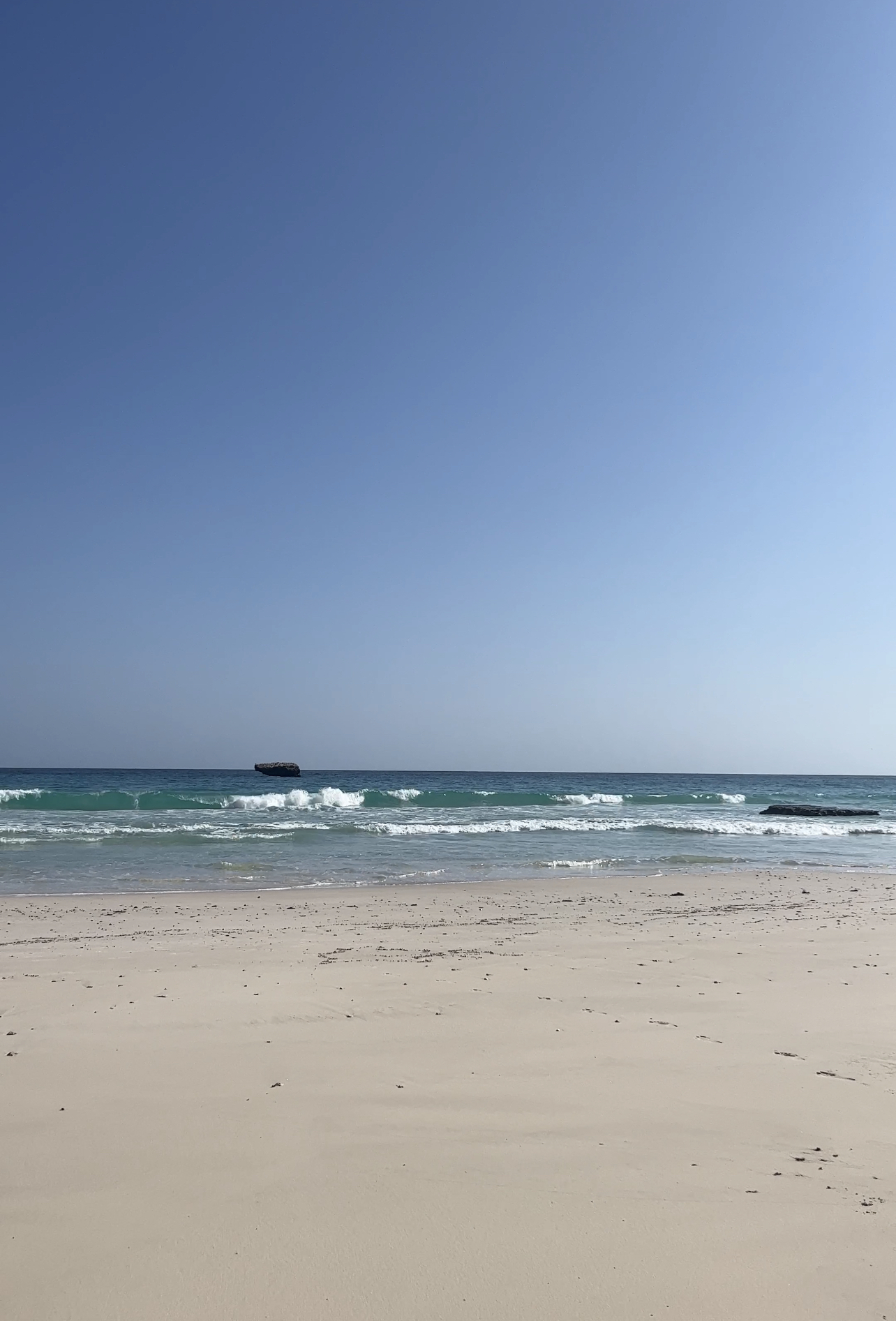
Fazayah Beach is a hidden gem in Oman’s remote Dhofar region that is well worth the journey. Here you will find crystal clear waters, soft white sand, and stunning rock formations.
The Marine Life of the Arabian Sea
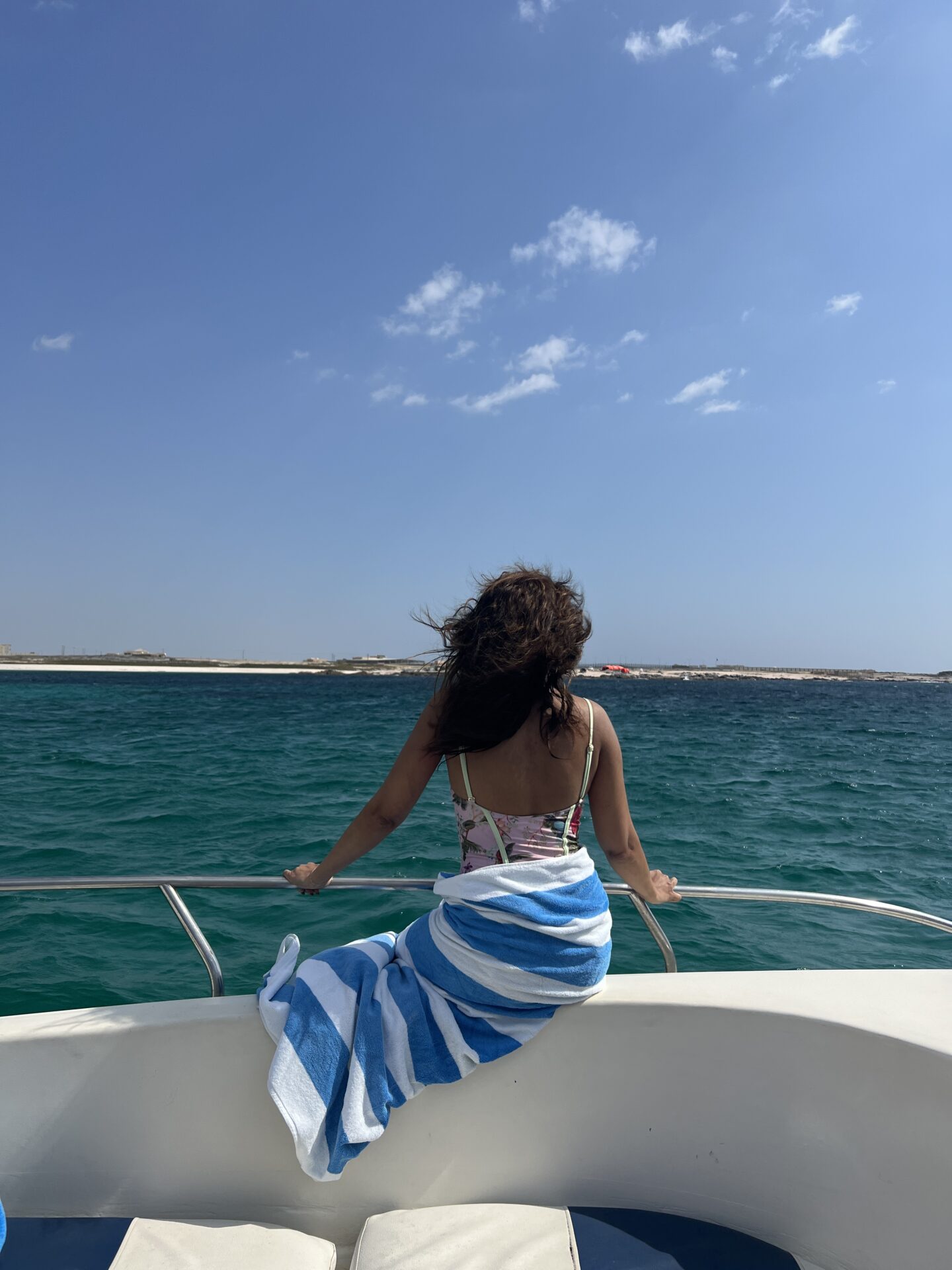
Take a boat trip on the Arabian Sea and discover the vibrant marine life beneath the waters. If you are lucky you may even spot Humpback Dolphins!
Practical information
Currency
The Omani Rial is the currency used in Salalah and Oman in general. You can use credit cards in most places, but carrying some cash for souqs is a good idea. ATMs can be found in most tourist areas and malls.
Plugs and Adaptors
Salalah and Oman generally use a Type G plug. The standard voltage is 240V, and the frequency is 50Hz. If you’re visiting from a country with a different plug and voltage, you’ll need an adaptor for your trip.
Dress code
In general you are advised to cover your shoulders and to wear knee length trousers or skirts.
As it is hot I would recommend loose light layers and light coloured clothing. It’s also a good idea to have a hat or something to cover your head under the intense sun.
If you plan to visit the Grand Mosque be aware that the rules are enforced quite strictly. Everyone must wear long trousers or skirts that cover the ankle. In addition women must wear long sleeves and cover their head with a scarf or similar.
Where to Stay
I’d highly recommend staying at Al Baleed Resort Salalah by Anantara, a stunning resort nestled between a private beach and freshwater lagoon. Here Omani artistry merges with the signature Anantara hospitality for an exceptional stay.
Here is a room tour of my Pool Villa:
Book it here: Al Baleed Resort by Anantara
Check out more hotels here
CHECK OUT TOURS HERE
Have I convinced you to visit Oman? Find out more and book your trip here.
Leave a Reply