Kenya is a haven for wildlife enthusiasts, with the sprawling savannahs containing some of Africa’s most exciting national parks and reserves. A staggering 80% of the country is currently protected for wildlife and environmental conservation.
There are currently 23 national reserves on land in Kenya managed by the Kenya Wildlife Service (KWS). KWS is a semi-autonomous government agency under the Ministry of Tourism, Wildlife and Heritage. They contain a higher density of wildlife and are perfect for spotting game, be it on game drives, walking trails, and other activities such as bush breakfasts or hot air balloon safaris.
This post will look at six of Kenya’s most popular national parks, which is your essential guide when booking Kenya holidays, as each park is so diverse so it will help narrow down which ones to pick and combine!
Masai Mara National Park
Contents
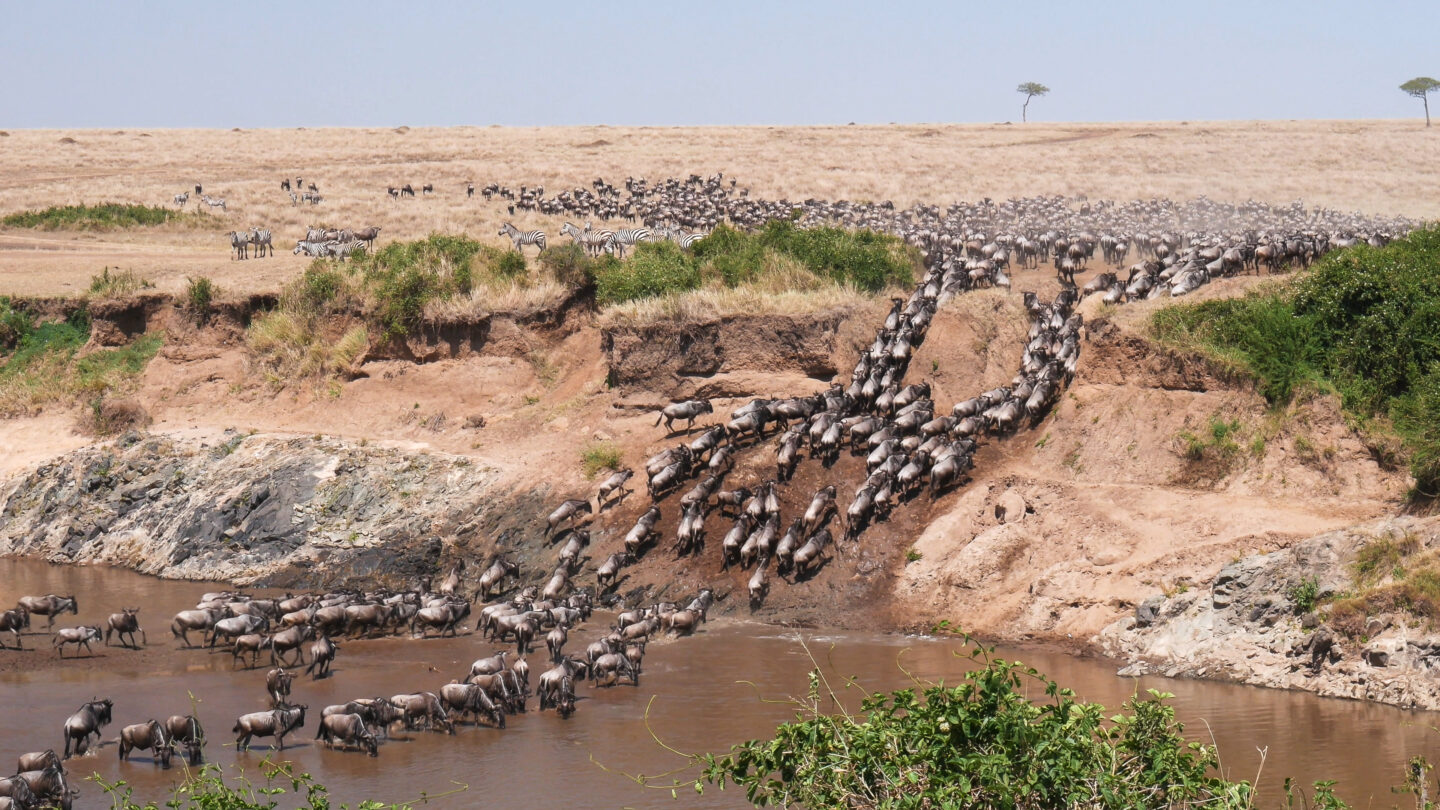
The Wildebeest Migration, Masai Mara, Kenya
The Masai Mara is the flagship of Kenya’s national parks. It’s a savannah paradise. With tall grass providing food for the herbivores and cover for the big cats, it’s a park that promises all the action of the wild.
The Masai Mara combines with The Serengeti in Tanzania to form Africa’s most diverse ecosystems. The Great Migrations, when thousands of wildebeests dive to their potential deaths as they cross the crocodile-infested Mara River is one of the wonders of the world.
The big cats are mostly present around December to February when it is a bit drier. The drier season is also when it’s easier and less expensive to visit the Masai Mara.
It is easily accessible from both Mombasa and Nairobi by car and flight and a great starting point for Kenyan safaris.
Highlights: The Great Wildebeest Migration
Best Time to Visit: July – October
Amboseli National Park
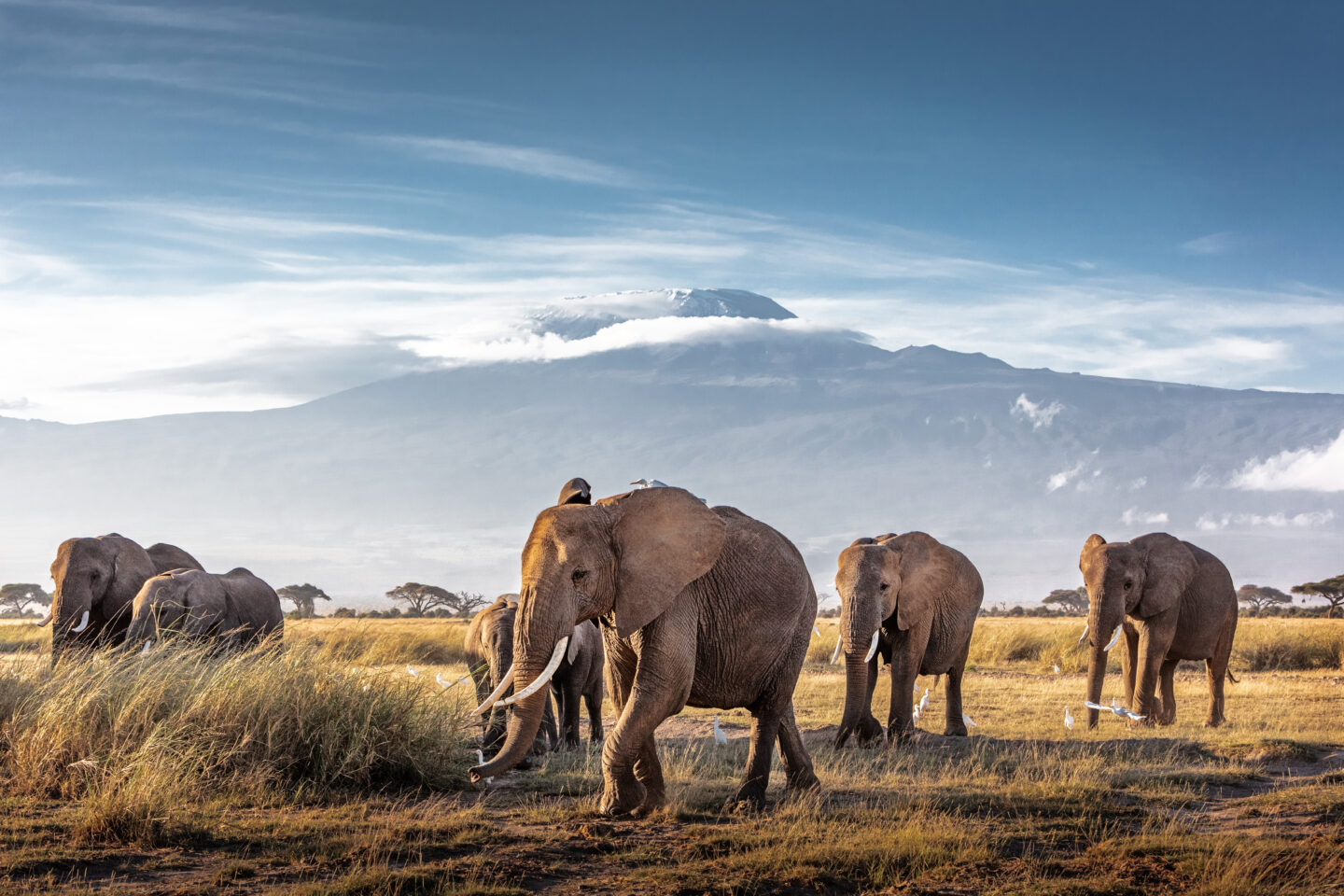
Amboseli National Park, Kenya
Another of Kenya’s most famous national parks, and my personal favourite is Amboseli National Park.
Watched over by the magnificent, majestic Mount Kilimanjaro, Amboseli boasts some of the best plains, forests, and marshes for wildlife to roam in.
It is most famous for its huge population of African Elephants.
It is easily accessible from Mombasa and Nairobi by both car and flight and this is a great itinerary if you are looking to go.
Highlights: Elephants; Views of Mt. Kilimanjaro
Best Time to Visit: June – October
Lake Nakuru National Park
Lake Nakuru National Park has 56 different species of wildlife, including the Black and the White Rhino, and the Rothschild giraffe. However, here you will only find the Big Four.
It is the flamingos who reign supreme here. Whether they are circling in the sky or having a drink in the lake, they are undeniably eye-catching hues of pink against blue backdrops. Once in a while, you could get lucky and sight the elusive leopard in a tree so always remember to scour the skyline too!
Lake Nakuru National Park is located on the floor of the Great Rift Valley, about 2 hours from Nairobi, and is best viewed in the drier seasons when more game drives are accessible.
Highlights: Flamingos
Best Time to Visit: June to March
Nairobi National Park

Nairobi National Park, Kenya
This park gets its bragging rights from being the only park in the world within city limits. It’s maybe the most unique thing to do in Nairobi and it is certainly one of the most unique national parks in the world!
Nairobi National park, however, is also one of the most diverse parks in Kenya, with black rhinos, lions, leopards, cheetahs, hyenas, buffaloes, giraffes, and 400 species of birdlife with over 400 species. With a backdrop of the city’s towers, being in Nairobi National Park gives you a longing for the freedom these animals enjoy.
Being only 10 km from the South of Nairobi City Centre, the park offers excellent picnic sites and corporate event venues.
One thing to note is that you will not find elephants in this park, but you can visit nearby Sheldrick Trust to see orphaned baby elephants at feeding time!
Highlights: Lots of rhinos; easily accessible from Nairobi
Best Time to Visit: June to September
Tsavo East National Park
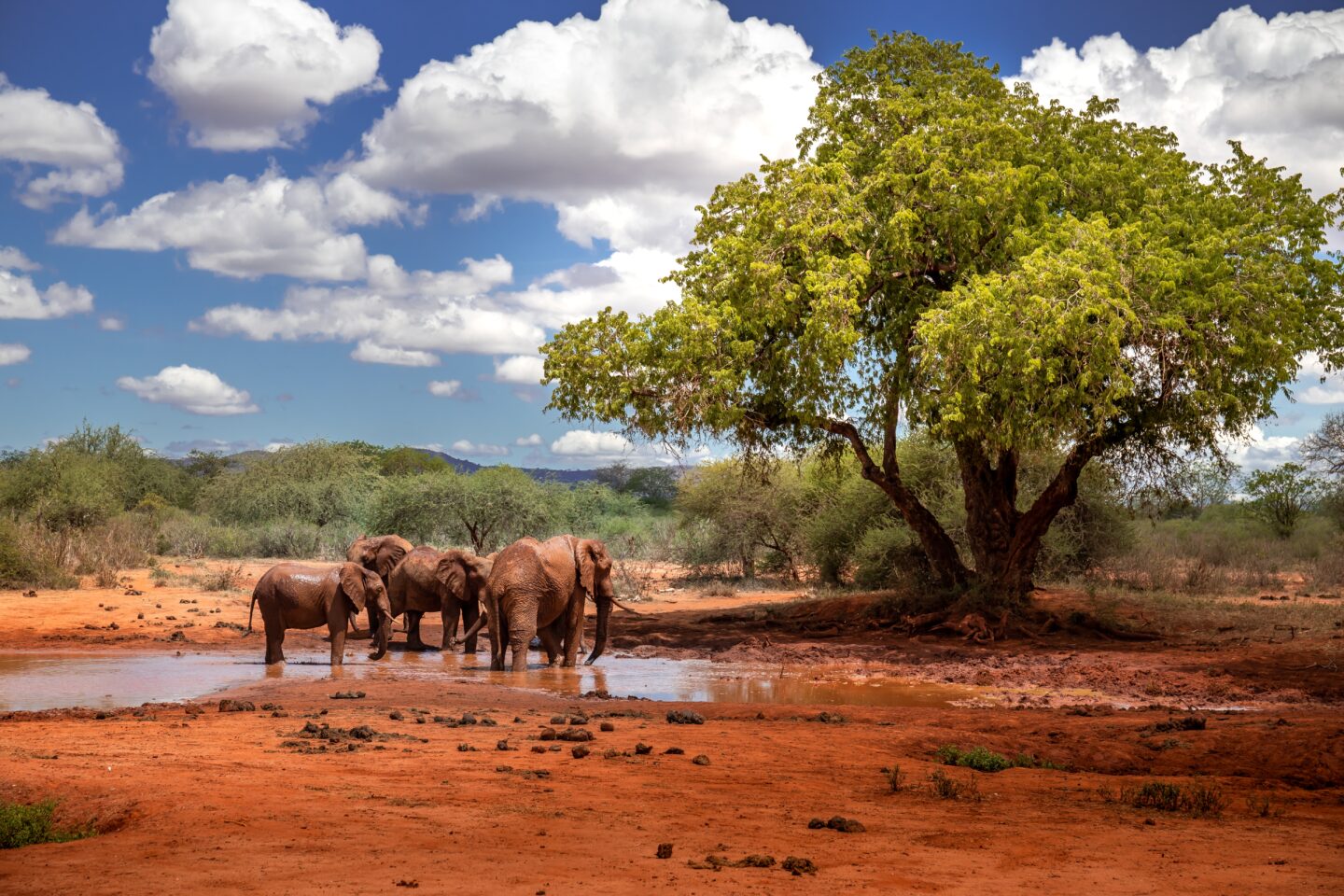
Tsavo East National Park, Kenya
Tsavo East National Park is the best place in the country to watch Elephants goofing around in the dirt and splashing in the Galana River. They are absolute toddlers here. It’s also home to the red elephant, rhinos, buffalos, and lions in Kenya’s largest protected area.
There’s also the Yatta Plateau, the longest lava flow in the world, stretching 300 km for the geologically minded.
The park is a 3-hour drive from both Nairobi and Mombasa. It is also served by nine different airstrips and the trainline.
Here you will find the unique red soil.
Highlights: Huge herds of elephants covered in red dust
Best Time to Visit: January to February, June to October
Tsavo West National Park
Tsavo West is more scenic than Tsavo East, with remarkable geographical features such as the Mzima springs and the Shetani (devil) lava flows.
It’s the kind of vast wilderness adventurers would salivate for. There are elephants, rhinos, and a rhino sanctuary, hippos, lions, cheetahs, leopards, and buffalos roaming the lands. And if you’re looking for a cinematic sunset, this is the park to experience one.
The Kenyan coast is also just a short distance away, so you can combine your trip to Tsavo West with visits to Kenya’s spectacular Marine Parks as well.
Highlights: Shetani lava flows; Rhino sanctuary
Best Time to Visit: January to February, June to October
This is a sponsored post in collaboration with Original Travel.
Leave a Reply